Exhibition
Display | Declaring independence: USA 250
30 Jun-29 Nov 2026
The British Museum
London WC1B 3DG
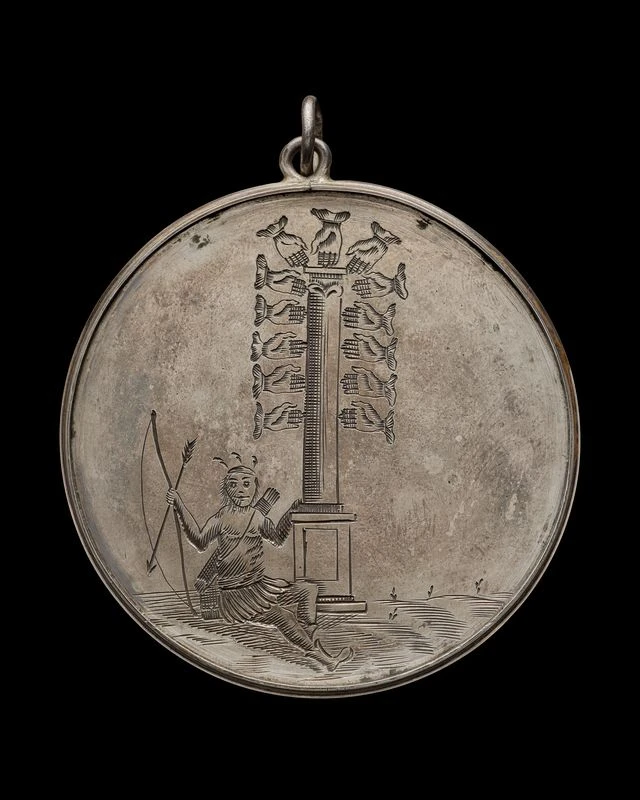
Washington Peace Medal © The Trustees of the British Museum
A new display at the British Museum will mark 250 years since the pivotal moment in history when the Thirteen Colonies declared independence from Britain, on 4 July 1776, forming the United States of America.
Declaring independence: USA 250 will bring together four objects with interconnected histories around the American Revolutionary War. These diplomatic gifts shaped alliances and cross-cultural relations between the three main powers involved in the conflict – the Revolutionaries, Great Britain and Indigenous North American Nations.
Three objects from the British Museum collection will be presented alongside a ceremonial copy of the Declaration of Independence, on loan from West Sussex Record Office, arriving halfway through the display’s run.
The Sussex Declaration is a handwritten copy produced on sheepskin parchment. It is the only handwritten ceremonial copy to exist alongside the original manuscript – the Matlack Declaration – held at the National Archives in Washington DC.
At the core of the display will be the Washington Peace Medal, an object that passed through the hands of all three parties involved in the war.
Engraved by Paul Revere in 1777, the medal was a gift from the Revolutionaries to the Wabanaki Confederacy to mark a Treaty of Friendship. It was later confiscated by the British as part of an enforced treaty and given to King George III. It was donated by King George IV to the British Museum in 1825.
One side features a portrait of George Washington, then commander of the Continental Army, and later the first President of the USA. The other shows a classical column surrounded by thirteen hands, representing the Thirteen Colonies, the future USA. An allegorical representation of a Native North American figure symbolises ‘America’ itself and reflects the importance of alliances with Indigenous Nations.
Also on display will be a wampum belt which represents peaceful diplomacy between the Lenape (Delaware) and the Haudenosaunee Confederacy in 1712. Its inclusion in the exhibition demonstrates the longstanding practice of diplomacy and alliances between Indigenous Nations. The Lenape signed the Treaty of Fort Pitt (1778) with the Revolutionaries – the first formal treaty between an Indigenous Nation and the United States.
Many Indigenous Peoples fought on the British side during the war. A pipe tomahawk given to Thayendanegea (Joseph Brant), a Mohawk, Haudenosaunee leader, represents the Mohawk alliance with the British. The engraving on the pipe reads, 'Given to my friend Joseph Brant from the Duke of Northumberland 1805’ who advocated for Mohawk land rights in Parliament following the war.
Together, the objects reveal the complex history leading up to, during and after the war, and demonstrate how diplomatic and material traditions were used to form alliances and negotiate sovereignty and power.