Exhibition
I dwell in Possibility
17 Jul-28 Aug 2026
PV 16 Jul 2026, 6-8pm
Pippy Houldsworth Gallery
London W1B 4BT
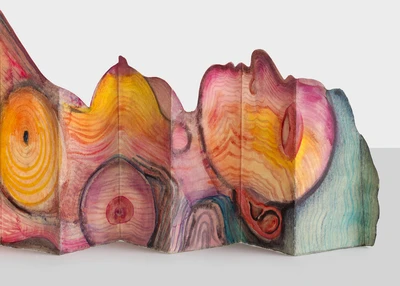
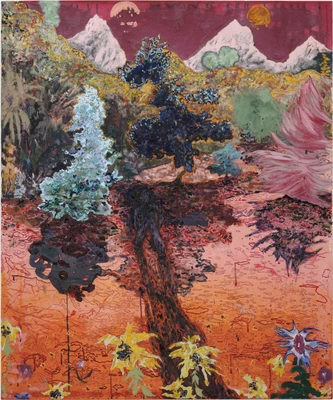
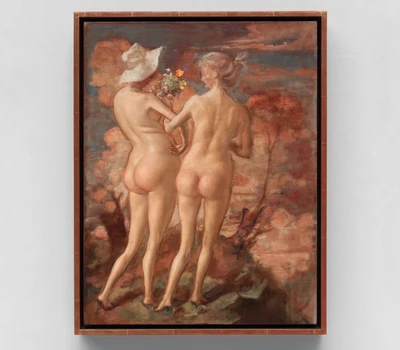
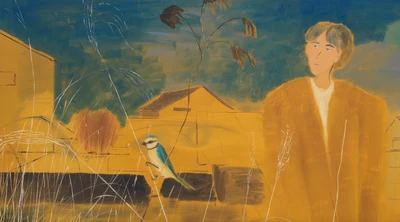
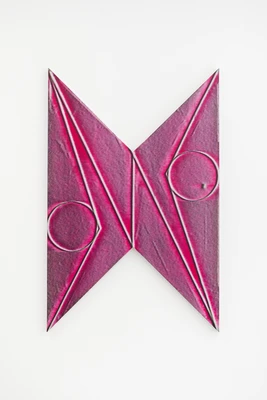
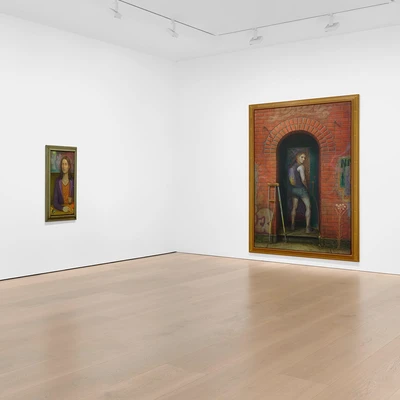
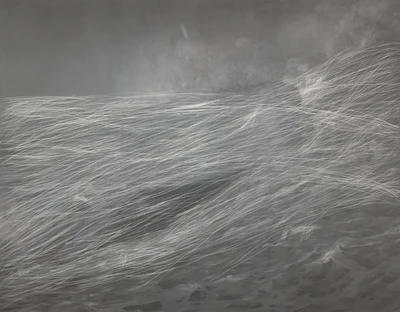
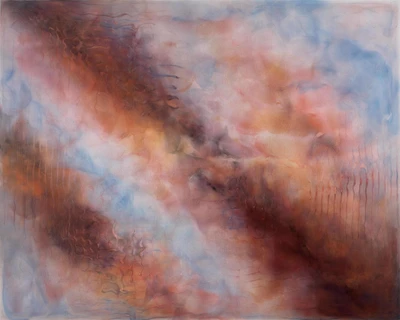
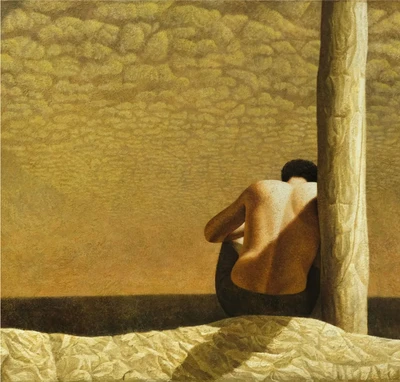
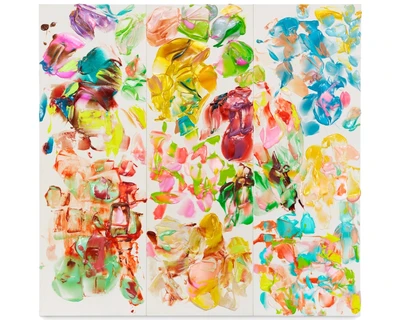
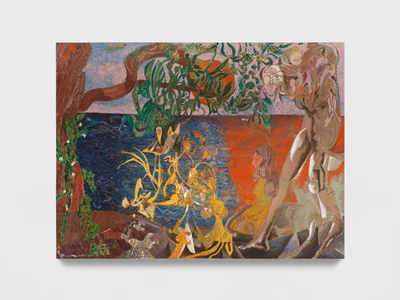
Pippy Houldsworth Gallery is pleased to present I dwell in Possibility, a group exhibition with 11 artists who explore the in-between, searching out moments that hover at the threshold of articulation, suspended in time and space. Curated in collaboration with London-based painter Shaqúelle Whyte, the exhibition draws its title from Emily Dickinson's c.1862 poem I dwell in Possibility.
In her poem, Dickinson imagines poetry as a capacious home, a literary form that holds greater expressive potential than prose, ‘more numerous of windows’ and ‘superior - for Doors’. For Dickinson, the poem resists enclosure, it is mutable and alive to interpretation. As in Dickinson's verse, the paintings in I dwell in Possibility refuse fixed categorisation. Suspended between abstraction and figuration, memory and observation, presence and absence, these paintings occupy a borderline terrain in which ideas emerge, transmute, and reform.
Late British painter Ken Kiff's visionary imagery unfolds within a realm where narrative is deliberately unstable, while American artist R. B. Kitaj brought together his Jewish identity and fervent imagination in paintings of disorientation and human complexity. Both have been associated with the likes of Frank Auerbach, David Hockney and Leon Kossoff since the 1960s, as well as other members of the School of London, a term first used in Kitaj’s 1976 catalogue essay for The Human Clay at The Hayward Gallery, London. Kiff and Kitaj helped to foster a shift in British artistic consciousness, challenging the preexisting limitations of figurative painting in a time dominated by Minimalism and Conceptual Art.
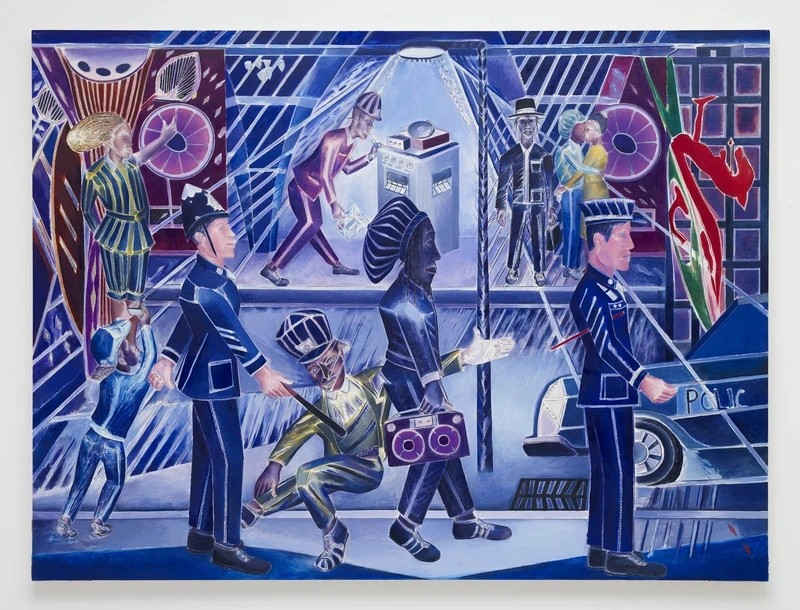
Grenada-born, UK-based artist Denzil Forrester has expanded the legacy of figurative painting through his depictions of London’s Caribbean community. His works celebrate the 1980s reggae and dub scene, whilst also addressing systemic injustices towards Black Londoners. Brixton Blue (2018) – a major painting transformed into a large-scale mural for Art on the Underground’s 2019 Commission at Brixton Underground Station – explores racial tensions, with a particular focus on police brutality. This work, which was a highlight of the 2021 Hayward Gallery exhibition Mixing it Up: Painting Today, curated by Ralph Rugoff, expands and recontextualises Forrester's early painting in the Tate Collection, Three Wicked Men (1982), a painting torn between joy and disquiet, currently on view at Tate Britain.
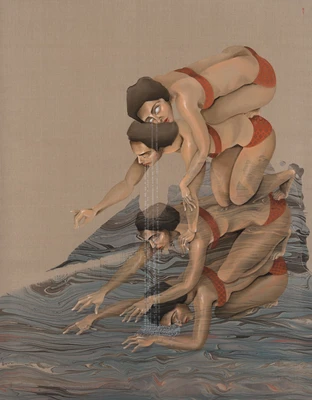
Modes of being beyond classification characterise each exhibited artist’s work. Existing in what British anthropologist Victor Turner in 1967 described as the ‘betwixt and between’, destabilising shifts in identity define the experience of liminality. Nowhere is this more evident than in the work of Michael Armitage, Shaqúelle Whyte, and Sosa Joseph. For these painters, psychological worlds are played out corporeally, buttressed against epic pillars of religion, myth and storytelling. As they each draw upon the cultural experiences of their respective Jamaican, Kenyan and Indian ancestry, landscape and figure intertwine. Here ambiguity exists in the figure’s relational instability, presenting bodies that are uncertain of their boundaries, or where they begin and end.
For London-born painters Jake Grewal, Antonia Showering and Hettie Inniss, painting too serves as a vessel for understanding liminality and multiplicity. Their works present landscape, memory and imagined architecture in states of delirium or disorientation. From the murky sublime of Grewal’s woodlands and Showering’s surreal arcadias, to the nostalgia of Inniss’ sun-drenched vistas, each of the artists evoke an unresolved sense of place.
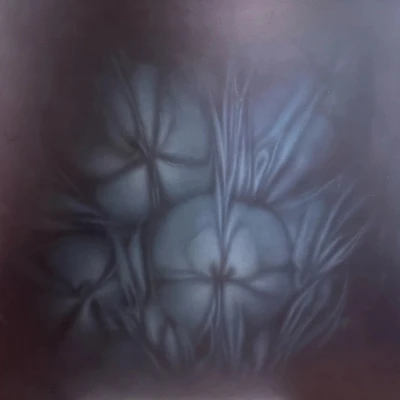
Finally, in the practices of Masao Nakahara and Jennifer Packer, liminality matures and completes its life cycle, shifting from the rituals of adolescence to a consideration of mortality, remembrance and the afterlife. Nakahara focuses on the Japanese concept of mono no aware (物の哀れ), the transience of life, its blossoming beauty and its inevitable passing. Packer's intimate flower paintings reference 17th century Dutch vanitas paintings as she engages with grief, care and commemoration in relation to loss and violence within Black American communities. Packer's paintings locate moments of quiet resilience within mourning itself, whilst Nakahara approaches this final transition of the self with humour and tenderness, a resolution found in a drifting ephemerality.
Together, these artists approach painting as a site of untethered potential that is grounded in personal experience. They invite the viewer to cross a threshold, to search out moments of possibility and potential, and all that exists in-between.