Overview
My Body is Dust
7–10 February 2026
Asylum Chapel, London
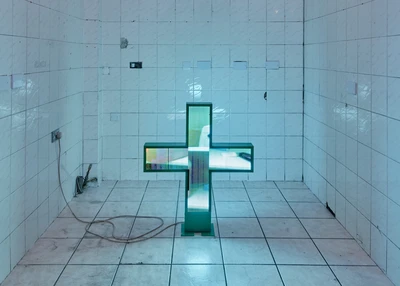
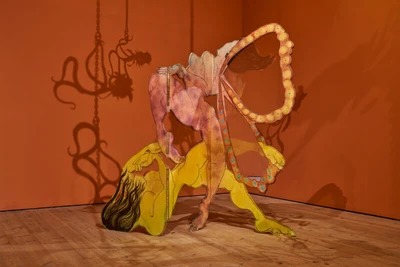
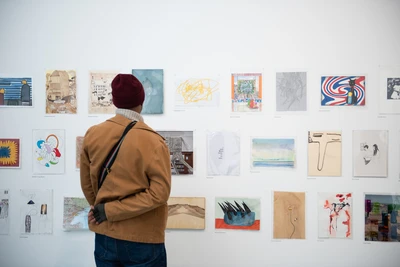
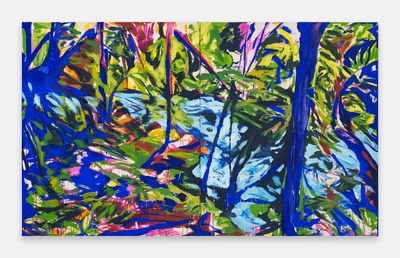
From 7 to 10 February 2026, My Body is Dust took place at Asylum Chapel in Peckham, London. The exhibition forms a phase of the “Othering” curatorial series. Conceived as a nomadic project, the series moves between culturally layered sites across London. Rather than relying on a single institution or fixed venue, it treats the city itself as an evolving exhibition structure.
My Body is Dust approaches the body as both architecture and history, bringing architecture, memory and present experience into the same frame.
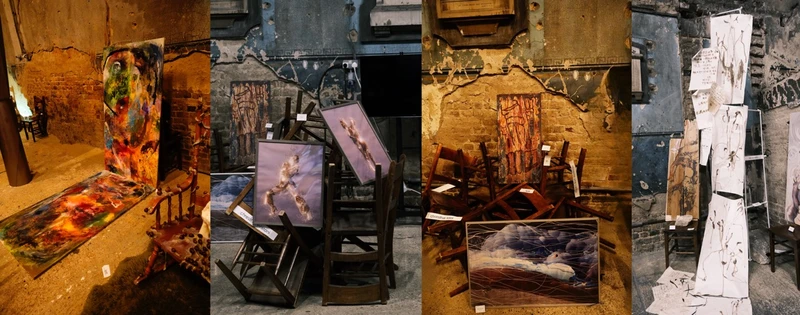
Asylum Chapel, with its broken stained glass, exposed beams and worn walls, appears less as a restored monument than as a body still in process. “Body” refers not only to the church but also to history itself. Here, history is not a completed past, but something continuously defined in the present. The title’s “Dust” suggests erosion and ageing, yet also an intensification of perception. When a space resists the neutrality of the white cube, echoes, filtered light and textured surfaces become more perceptible.
The exhibition extends “Othering” from a sociological term into spatial practice. Here, it does not refer solely to identity difference, but to a shift in how viewing occurs.
“Othering operates in three ways on site: geographical marginality, functional fluidity, and a displacement of viewing logic — the exhibition does not impose a single narrative but allows meaning to emerge through movement.”
— Junze
Within this framework, “use” becomes the spatial expression of Othering.
The curatorial structure draws on Giorgio Agamben’s reflections on “use.” Throughout the exhibition, the Greek verb chresthai appears repeatedly. In ancient Greek, the term was often used to describe relationships between humans and gods, citizens and the polis, or people and language, rather than possession of objects. It suggests involvement rather than ownership or control.
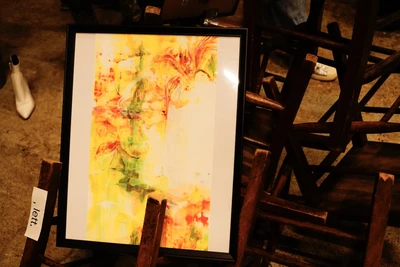
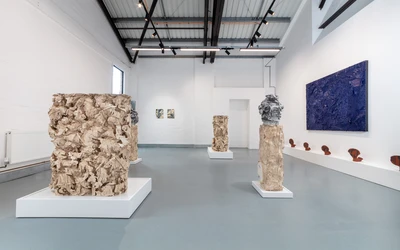
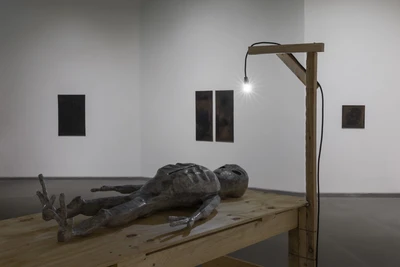
Placed within the chapel, chresthai does not function as explanatory theory but as an active condition. Chairs are redistributed across passageways, between works and along architectural edges. They may be sat on or ignored; they serve as supports yet interrupt circulation. Viewing becomes discontinuous and repeatable rather than linear. Artists use the space, yet the space reshapes the scale and context of the works. Visitors use the chairs, yet the chairs redirect their bodies.
One visitor remarked:
“The arrangement of the chairs within the exhibition was striking. Serving as a crucial element, they functioned as display pedestals yet transcended that role. Stacked into various sculptural forms, the chairs themselves felt like an independent work of art.”
Another visitor, with a background in linguistics, observed:
“I noticed the curator primarily employed two specific terms, both signifying ‘use.’ Their placement compelled us to confront the significance of these texts within the exhibition's context.”
Within this structure, the exhibition also raises a persistent question: when works are placed within a historically charged site, are they inevitably redefined? My Body is Dust does not treat the chapel as a neutral container, but as a body continuously in use. Broken glass, worn surfaces, shifting daylight and resonant acoustics form part of the conditions of viewing. To enter the space is to enter a relationship.
In Peckham — an area that has seen rapid artistic migration alongside ongoing urban redevelopment — the question of “use” carries particular weight. Art spaces contribute to the city’s transformation while also being shaped by it. Rather than resolving this tension, the exhibition acknowledges it as part of its structure. It does not assume that artworks exist independently of their surroundings. Instead, it considers how works operate within a specific environment. Viewing unfolds over time rather than remaining fixed within a protected frame.
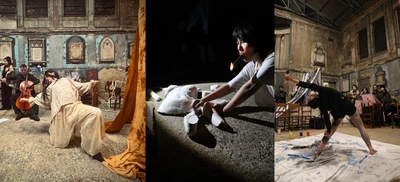
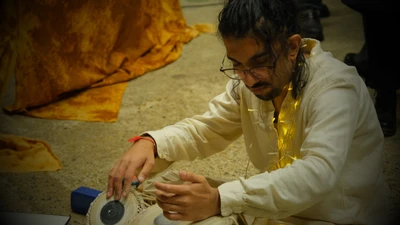
The opening night welcomed over 200 visitors. Live performances further intensified the relationship between body and time. Rhythmic percussion, sustained physical gestures and painterly traces unfolded within the chapel’s acoustics, allowing sound to merge with architecture. A sound designer described the experience as “a sonic architecture… immersed in sounds from every direction.”
Historically, the chapel’s reactivation has not resulted from a single defining event, but from an accumulation of exhibitions, weddings and community gatherings. The exhibition understands this continuity as a form of coexistence. Artists, visitors and local participants enter the space at different moments, forming a temporary and non-exclusive community.
My Body is Dust does not aim to deliver a fixed conclusion. While key works anchor the core questions, deviations and improvisations are permitted to surface. The exhibition leaves traces rather than statements.
In this sense, Dust signifies both erosion and emergence. History is not static memory, but something shaped through ongoing acts of use.
SPIRA9 intends to continue developing this curatorial framework and to gradually establish the “Othering Festival” platform. Operating nomadically across multiple cultural contexts in London, the platform will provide artists with opportunities to work within varied sites, allowing exhibitions to function as evolving processes rather than fixed structures.
Invited Artist:
13 God (Najah Westbrook) | Aida Pouryeganeh | Anastasia Neff | Blackout Collective (Valeriia Lakrisenko & Alexander Belov) | Charlotte Saint Cullen | Claudi Piripippi | Crimson DM Lily | David L. Stewart | Diane Eagles | Doğan Özdemir | Doupu | Eric A. Johnson | Eva Oleandr | Federico Tejeda | FINA FERRARA | Francesca Tomlinson | Giulio Cusinato | Grace Tenneh Kromah | Hannah Clarkson | Helga Borbas | Lily Ziwen Li | Lu Meng (Luna Meng) | Iola Hilliker | Irena Paskali | Jane Hatfield | Jelena Perišić | Joana Pereira da Costa | Judy Maxwell-McNicol | Katia Be | Kristina Rutar | Lara Gallagher | Lu Jin | Luca and Katrina Dayanc | Niah McGiff | Nikki Allford | Olesia Kryvolapova | Oyedeji Mohammed | Roseline (Jingyuan) Zhang | Sai Ma | Saud Baloch | Sarah Cherpreau | Shelley Lafferty | Silvia Braida | Victoria Julia Valentine | Yana Dmitrieva | Yeri Jun | Yiwen Liang
Opening Night Performance:
I. As we lay dying
Performance丨Juice Cui Santi Lowe Mega Geng Siqi Chen
Installation丨Juice Cui & Mega Geng
II. Rite in lingering ground
Performance丨Lanyun Huang(Finch)
III. Pulse: Jazz Improv.
Performance丨JAE-X
IV. When We Listen to Our Body through Emotions [II]
Performance丨Roseline (Jingyuan) Zhang
Exhibition Credits:
Curatorial Team:
Curator: Junze Zhang
Associate Curators and Volunteers: Yao Li, Qianyu Zhou, Jialu Liu, Hongqian Zhang, Yiran Yin, Li Yang, Lexie, Yuxuan (Olivia) Zhao, Kris Ng, Clio (Yuena Chen)
Exhibition Producer: SPIRA9 Art
Exhibitions Coordinator: Sophie Caldwell
Creative Directors: Oliver Xue, Kaycee Qu
Press & Communications: Aahliah C., Olivia Shuay
Technical Support: Thomas Harrington
Graphic Designer: Qingxuan Zhang, Daniel Reeves
Photographers: Qizhi Che, Yao Li, Han Xu, Zhuosi Shao, Yuan Dai
Book now