Overview
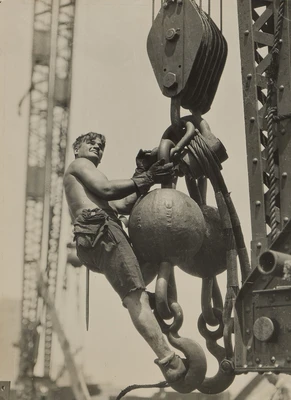
Often understood as devices or implements—objects forged, carved, or engineered for a singular purpose. Yet when we think beyond their physical form, a tool can also be understood as an extension of the body: an external ligament that supports, shields, disrupts, or propels us toward transformation and change. Tools mediate our relationship to the world; they shape how we act, remember, build, and resist.
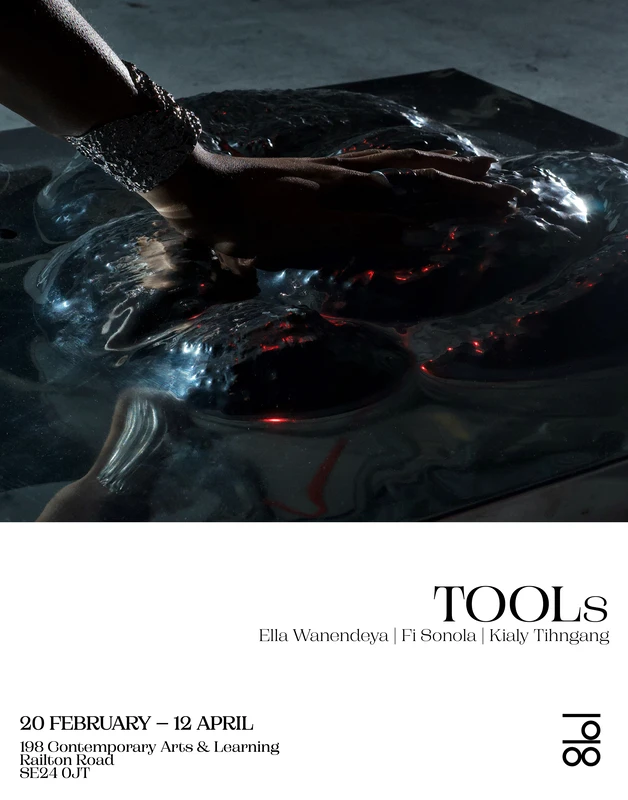
TOOLS is a multidisciplinary exhibition that explores how artists reinterpret and unearth tools as strategies for survival, self-definition, and subversion. Through lived experience, speculative worlds, and embodied practice, the works propose tools for holding memory, disrupting imposed narratives, and imagining alternate temporalities. Together, they ask not only how tools function, but what kinds of futures they make possible.
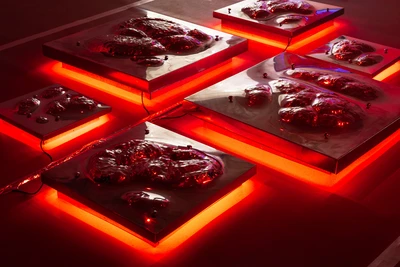
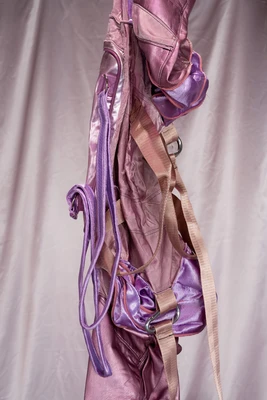
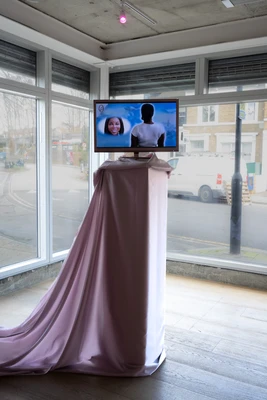
Across sound, performance, sculpture, moving image, and installation, the artists in TOOLS reimagine tools not as neutral instruments, but as objects shaped by power, history, and use. The exhibition brings together practices that engage with ancestral and contemporary tool-making; from sonic archives and ritualised performance to speculative wearable forms and fabulated artefacts questioning identity, diaspora, gender, trauma, and memory.
FEATURED ARTISTS
Ella Wanendeya
Ella Wanendeya is a designer working at the intersection of sensory experience, memory, and reimagination. She approaches design in an expanded sense - seeing every object, sound, and interaction as a communicator. Her work explores the tactile and ephemeral, deconstructing what a memory can be. By working with sound and visuals as a fluid, living medium, she allows data to spill over, slip between formats, and exist beyond rigid structures. At its core, her practice is a sensory trip - one that invites us to reconnect through touch, resonance, and nostalgia.
Fi Sonola
Fi Sonola (born 1995 in Lagos, Nigeria) is a London-based British Nigerian artist whose practice functions as an "interdisciplinary machine" for rebuilding identity post-trauma.
Working across painting, sculpture, performance, and photography, Sonola creates bridges between her lived reality and an anime/manga-inspired alternate universe where she processes conflict and trauma using encoded communication systems that allow her to navigate sensitive subject matter while maintaining dignity. Her auto-ethnographic approach examines the social and cultural landscape of London, focusing on experiences of Black women and femmes, while tackling themes of mother-daughter conflict, identity ambiguity, and female power dynamics.
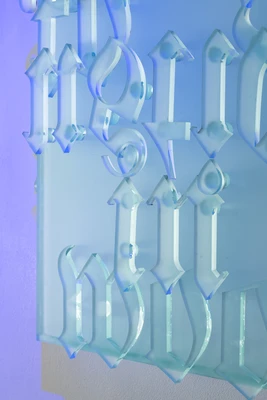
Sonola's text-based painting practice employs Stuart Hall's modes of communication and structuralist approaches to create protective layers around sensitive content. She addresses family domestic abuse through words and symbols embedded in colour, texture, and typeface, offering adjacent meanings that shield vulnerable elements while maintaining communicative power.
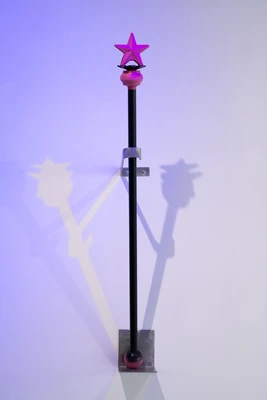
Central to her performance work is Rivet, an alter ego inhabiting her constructed universe. Drawing on performance studies theory, Sonola uses this persona to process trauma in ways painting alone cannot accommodate. Through immersion in this meta reality she transforms ritualistic performance of abuse into performance of play, reclaiming power at her own pace while authentically reflecting her experience.
Kialy Tihngang
Kialy Tihngang is a Glasgow-based Cameroonian-British artist and researcher. She works in moving image - involving elaborate handmade sets, costumes, graphics, props, and collaborations with other practitioners - as well as sculpture, textiles, performance, and writing.
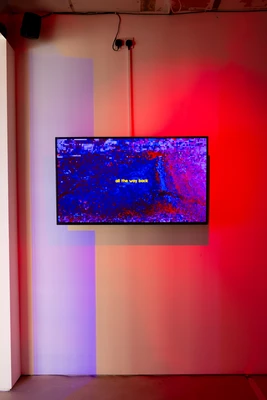
Tihngang’s practice focuses on colonial European misrepresentation, extraction, and demonisation of West African cultural practices, but also on her own misremembering, misreading, and romanticisation of said practices, fabulating artefacts from reimagined histories and speculated futures.
Her work uses Afro-presentism, the dark humour of Nollywood, and the visual language of Western mass media to explore Blackness, queerness, Britishness, and the many absurd structural oppressions surrounding these personal themes.