Overview
"When the real is no longer what it used to be, nostalgia assumes its full meaning". Jean Baudrillard, 1998.
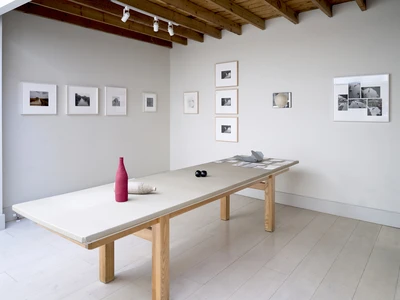
It has long been recognised that memories are unreliable and nostalgia is a sentiment loaded with fiction. What is changing is our relationship to the present in this ‘post truth’ era, and that affects the veracity of both the past and the personal. The substitution of shared facts with ‘alternate facts’ affects a self that is now subsumed into an algorithmic maelstrom where all previous anchors of certainty have been removed. It is to this uncertainty that nostalgia now applies itself. The constituent parts of this exhibition look to engender a dialogue between nostalgia and the algorithm through the personal and our new post-fact world.
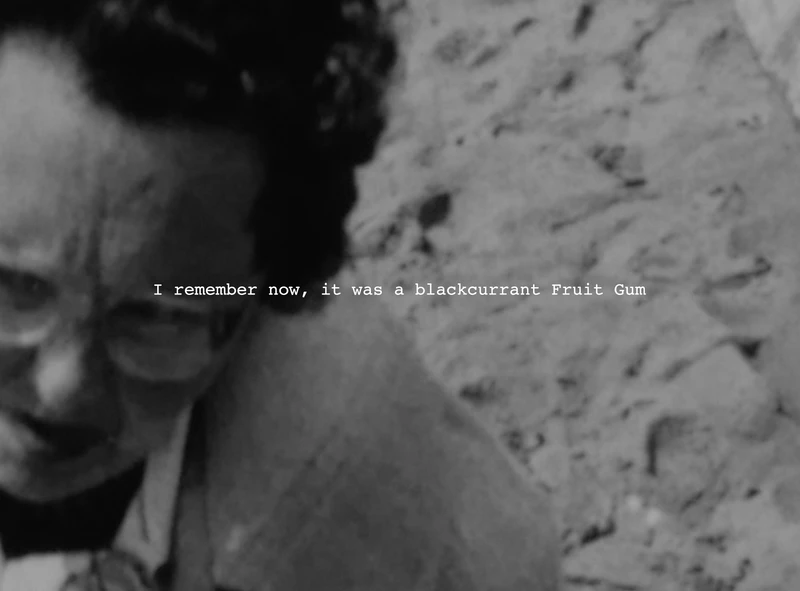
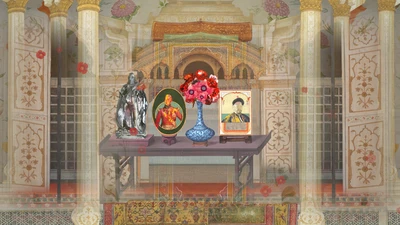
The short film Instamatic, 2024, directly considers the emotional pull of nostalgia through the illusion of memory. The film presents as a slide show of family photographs with a narration recalling memories that appear both highly personal and private. However, all of the photographs were found and of unknown origin, while the memories were fabricated in collaboration with ChatGPT using prompts in response to the images. This conceit undermines the authenticity of the authorial voice and confronts us with the conundrum of what to trust in our own past and the stories that we tell.
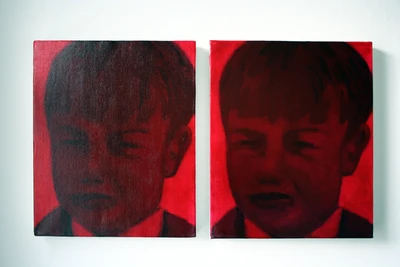
Unstable Relations, 2012, belong to a series of double self-portrait paintings, based on a single black and white photograph of the artist aged 7 years old. There is nothing remarkable about the original photograph except that the boy (the artist) is wearing a shirt and tie and has a particularly unsympathetic haircut - yet these two features seem to take the image out of the specific and into the general: it could have been any young boy from anytime between the 1930s and the 1970s. There is an elasticity of reading the paintings between the specific memory of the moment (for the artist) and an historicism that is as much to do with fiction, history lessons, tv documentaries, and the archival. Nostalgia and history seemed to pour out of, and into, this image.
To further occupy the territory between the photographic and the painted image, the paintings are given a red glaze, which while adding to their paranoiac presence, also suggests the image being realised under the developer’s light. Both the photographic and the paranoiac are then emphasised further as a consequence of their doppelganger repetition. Through these visual devices the movement of memory and fiction renders the image both unstable and imprecise. The paintings are then presented over a large vinyl blown up film still image taken from ‘Instamatic’ generating an arrested bricolage and a shift in scale, a moment of spectacle without coalescence.
Lastly, the moment of this paradigm shift to our ‘post truth’ world of ‘alternative facts’ happened with the aftermath of the Sandy Hook tragedy. On December 14, 2012, a mass shooting occurred at the Sandy Hook Elementary School in Newtown, Connecticut, United States. The perpetrator, 20-year-old Adam Lanza, shot and killed twenty-six people. Twenty of the victims were children between six and seven years old. In the weeks that followed, a number of fringe figures promoted conspiracy theories that disputed what occurred.
The one that gained the most traction, as popularized by Alex Jones on his InfoWars podcast, denied that the massacre actually occurred at all, asserting that it was faked. It claimed the event was a classified training exercise involving members of federal and local law enforcement, the news media, and ‘crisis actors’, which they claimed was modelled on Operation Closed Campus, an Iowa school-shooting drill that was cancelled in 2011 amid public outcry. Jones described the shooting incident as "synthetic, completely fake with actors".
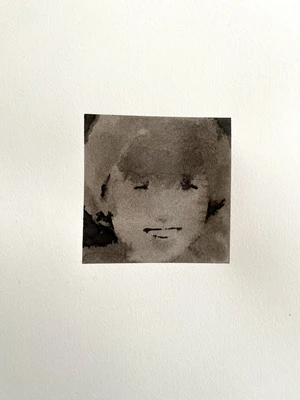
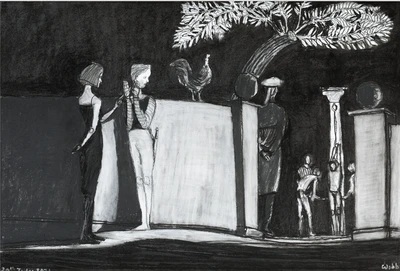
In ‘Year Book’, 2024, these ink drawings address this loss of trust in what we know. Each child is drawn from a Google image search, yet trying to fix them in ink seems analogous to holding onto both a fading memory and an idea of what might constitute a fact. To paraphrase Antonio Gramsci: out of this nostalgia we have for a world that has died, Sandy Hook was perhaps the moment that gave birth to the monsters of the present, while a new world struggles to be born.