Overview
Join Flare Up curators, Natasha Hoare and Mariana Lemos, alongside Amanda Cachia and Lisa Slominski, co-editors of forthcoming book series Critical Studies in Art, Disability & Access (Manchester University Press), for a discussion of curatorial practice, disability studies, access, and cultural production.
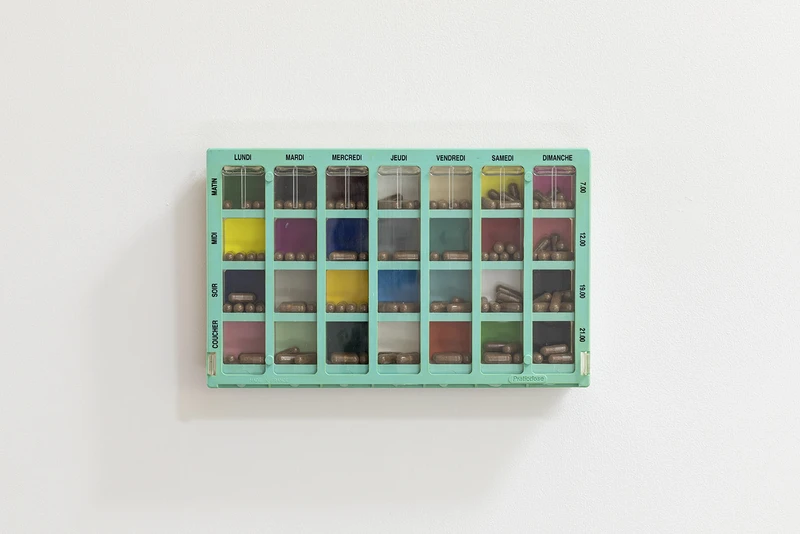
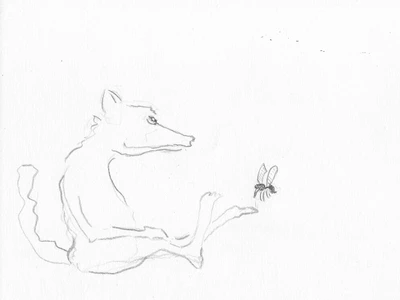
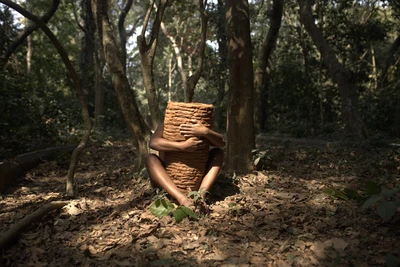
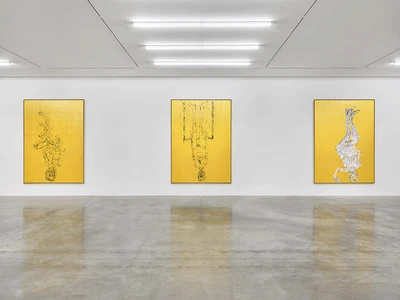
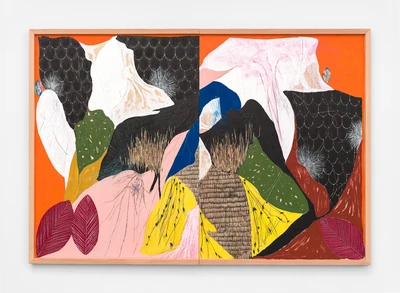
Taking Flare Up as both a conceptual and political point of departure, the conversation will explore how disability and chronic illness unsettle normative assumptions around temporality, communication, aesthetics, labour, authorship, participation, and institutional practice. Moving between exhibition-making and academic discourse, the event considers disability not as a supplementary framework for curating, but as a critical methodology that reshapes how contemporary art can be experienced, organised, and understood.
The discussion also introduces the intellectual concerns of Critical Studies in Art, Disability & Access, a new scholarly series foregrounding disability studies as an essential field for rethinking visual culture, access, embodiment, and the politics of representation across contemporary art and curatorial practice.
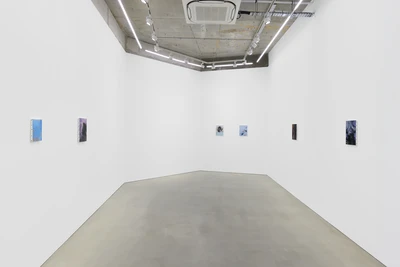
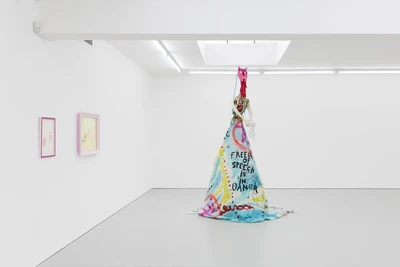
Natasha Hoare and Mariana Lemos will begin by introducing the curatorial framework and themes of Flare Up, reflecting on the exhibition’s engagement with the aesthetics and poetics of illness, disability, neurodivergence and Deafness – or what is increasingly referred to as crip. Amanda Cachia and Lisa Slominski will then offer short presentations drawn from their respective research and curatorial methodologies in dialogue with questions emerging from the exhibition and the wider field of disability arts scholarship. Cachia will speak on her new book Hospital Aesthetics: Disability, Medicine, Activism, while Slominski, drawing on long-term engagement with supported studios, will reflect on how disability unsettles normative assumptions around communication, labour, and artistic agency.
Departing from the format of a conventional panel discussion, the event will unfold as an open dialogue where speakers generate questions and provocations live in response to one another’s presentations — creating space for critical exchange, collective thinking, and unexpected connections across disability arts, curatorial practice, and contemporary cultural discourse.
Please note this is an online event. A zoom link will be sent to all ticket holders ahead of the event.
BIOGRAPHIES
Amanda Cachia (Ph.D. UCSD, 2017) is Professor of Practice in Museum Studies in the School of Art at the Herberger Institute for Design and the Arts at Arizona State University and Affiliate Faculty in the Disability Studies B.A. Her research interests include disability art history, theory and activism, crip curatorial practices and access aesthetics, museums, institutional critique, and social justice, and critical disability approaches to translation, movement, medicine, and health. Cachia is the author of three books, Rehabilitating the Asylum: Mental Health Justice and Contemporary Art, (Manchester University Press, forthcoming 2027), Hospital Aesthetics: Disability, Medicine, Activism (Manchester University Press, 2025), and The Agency of Access: Contemporary Disability Art and Institutional Critique (Temple University Press, 2024), the latter of which was shortlisted for the College Art Association’s 2026 Charles Rufus Morey Book Award. She is also editor of Curating Access: Disability Art Activism and Creative Accommodation (Routledge, 2022), which includes over 40 international contributors. She is currently working on her fourth book project, Disability Art: A Political History,under contract with Yale University Press. Cachia is the founding editor of the Critical Studies in Art, Disability & Access book series with Manchester University Press, launched in May 2026 – an ambitious platform that challenges art history’s entrenched ableism by positioning disability as a critical force reshaping curatorial practice, visual culture, and the politics of access; the series is co-edited with Lisa Slominski, author of Non-Conformers: A New History of Self-Taught Artists, published by Yale University Press.
Mariana Lemos is an independent curator based in London working with performance art, affect, and crip phenomenologies. Her curatorial approach is based on disability access and feminist methodologies. She holds an MFA in Curating from Goldsmiths University (2020) and is an Associate Lecturer at the MA Curating and Collections at Chelsea UAL. She is part of the Feminist Duration Reading Group, currently in residency at Goldsmiths CCA, and a Board Member of Saloon. She also works with the Flat Time House in coordinating the London Residency Network. She has published texts in Frieze, Art Review, Flash Art and others. Recent and upcoming projects include Antonia Luxem: On Falling, Annex by the Koppel Project, London (2026); Duets,Teaspoon Projects, London 2025; A Tragical Romance,Wonnerth Dejaco for Curated By, Vienna (2024); Vaivém by Francisca Pinto, Ostra, Lisbon (2024); DIG, IN: Maisie Maris & Laura Mallows’ at Staffordshire St, London 2023; ‘INSOMNIA’ by Leah Clements at South Kiosk, London 2022-23. Upcoming shows include ‘Flare-Up’ at Goldsmiths CCA, London (May-Aug 2026); and Blood and Coffee, Vienna Arts Academy (Nov 2026-Feb 2027).
Lisa Slominski is a writer, curator, and PhD candidate at Kingston School of Art whose research explores disability, curatorial methodology, and cultural intermediation within contemporary art. Centred around her long-term engagement with Nnena Kalu and ActionSpace, A Liminal Site examines how artistic agency is fostered and mediated within supported studio contexts, with particular attention to non-normative communication, facilitation, and the representation of learning disabled artists. Drawing on disability, feminist, and decolonial thought, the project develops a liminal curatorial and critical methodology attentive to cultural intermediation and relational agency. Slominski’s wider curatorial and writing practice engages with questions of access, care, and positionality across exhibition-making and visual culture. Recent projects include Super Trouper at Stanley Picker Gallery (2026), James Paddock: Life Could Be Done So Much Better, Exeter Phoenix (2024), curatorial work with Jo Longhurst at Studio Voltaire (2023) and chair of the symposium Curating and Coalition: Challenging and Expanding the Art World in the Wake of Nnena Kalu’s Turner Prize Win (2026). Her writing has appeared in Art Monthly and other contemporary art publications. She is the author of Nonconformers: A New History of Self-Taught Artists (Yale University Press, 2022). She holds a BA in Visual and Critical Studies from the School of the Art Institute of Chicago and an MFA in Art Practice from Goldsmiths, University of London. She is co-editor, with Amanda Cachia, of Manchester University Press’ forthcoming series Critical Studies in Art, Disability & Access, and is also Senior Art Producer at the Contemporary Art Society and co-founder of Art et al..
Her book, Nonconformers: A New History of Self-Taught Artists (Yale University Press, 2022) presents an international history of artists often identified as ‘self-taught’ advocating for a nuanced understanding of art often challenged by the establishment. It considers how predetermined personal/cultural conditions (race, poverty, disability, mental illness) often presented challenging positions much more complex than just being self-taught. Her articles have also been published by Cambridge University Press, Burnaway: Contemporary Art and Criticism from the American South, Hyperallergic and ArtUK.
Book now