Overview
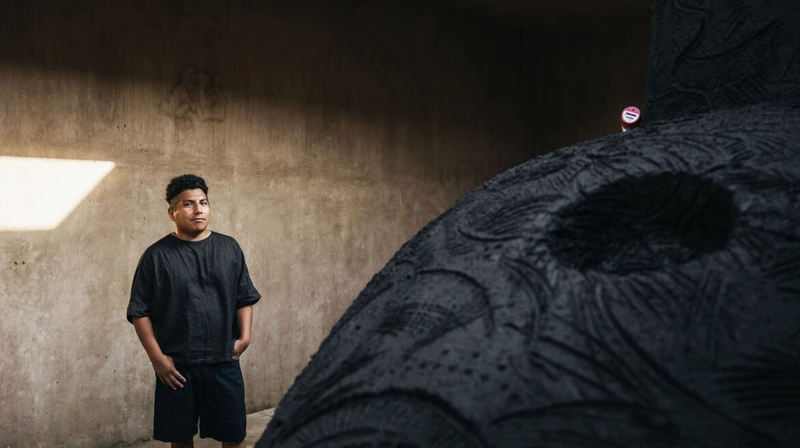
Whitechapel Gallery presents a new commission from Argentinian Lisbon-based artist Gabriel Chaile (b. 1985, San Miguel de Tucumán, Argentina). Archaeology of Memory (Arqueología de la Memoria) marks Chaile’s first major London institutional solo show following his shortlisting for the Fourth Plinth (2024) and presentation at Studio Voltaire (2023).
Chaile’s practice is rooted in the distinctive cultural traditions of north-west Argentina. He creates engaging anthropomorphic sculptures, often monumental in scale using adobe (a type of clay made from local organic materials) which reinterpret the formal and material language of the region’s indigenous communities. Acting as both anthropologist and storyteller, Chaile investigates what he terms the ‘genealogy of form’ – the idea that certain forms, motifs or shapes repeat throughout history, taking on a new significance in each changed context. Throughout his work, Chaile features recurring figures and symbols that memorialise and recall a lineage of traditions and practices drawn from his ancestors and community.
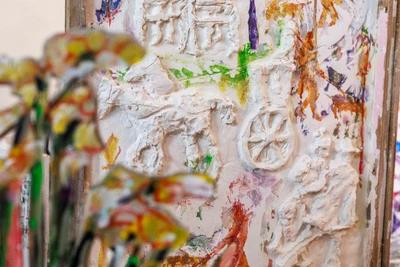
For the commission at Whitechapel Gallery, Chaile will create a site-specific installation that engages with the particularly rich and diverse historical and cultural identity of the East End. Continuing his long-standing interest in collecting ceramics and other items from across the globe, Chaile will scavenge and source a range of objects (decorative and functional) from the local area surrounding Whitechapel Gallery, which will then feature in the exhibition. When entering the gallery, visitors will encounter a group of adobe sculptures that act as both containers for, and guardians of, the various objects Chaile has found. His use of ancient organic forms to display culturally diverse objects offers a particularly intimate way of connecting worlds, peoples and stories, within a configuration that evokes a site of archaeological excavation.
Archaeology of Memory expands Chaile’s interests and practice, creating a terrain, or environment, sown with different histories and reflecting the many ways of living across diverse geographies. While his work initially appears rooted in materiality, it reveals a rich conceptual framework that offers audiences the means to approach complex issues – as he does – in the manner of an archaeologist.