Overview
Angela de la Cruz, Abi Palmer, Avril Corroon, Bella Milroy, Benoît Piéron, Carolyn Lazard, Christine Sun Kim, Derek Jarman, Félix González-Torres, Freestylers, Jamila Prowse, Jesse Darling, JJJJJerome Ellis, Leah Clements, Lizzy Rose, RA Walden and Rachael Crowther.
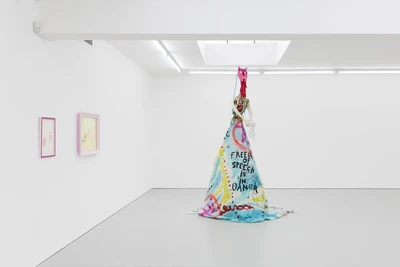
Flare-Up will be the first institutional exhibition in London to bring together UK-based and international visual artists whose work engages with the poetics and aesthetics of illness, disability, neurodivergence and Deafness. Presenting work by seventeen artists across Goldsmiths CCA, the exhibition brings together sculpture, installation, painting, film, poetry, music and performance as tools of expression and activism.
A flare-up refers to the fluctuating intensification of symptoms associated with chronic conditions; in music, a flare is a surge in volume or energy – an escalation that can also be celebratory. The exhibition draws on this affective quality, presenting works that use light, sound and water to engage with transcendence, mourning and joy. These works move outward from lived experience toward intersectional political realities without collapsing difference into universality. Many works address the daily rituals of care – or survival – alongside the labour of access. They also attend to the spiritual and redemptive, whether through hope placed in a medical system where much remains unexplained, or through the bodily and emotional intensities of pain, exclusion and alienation, intercut with intimacy and pleasure.
Built in 1898 as a washhouse, the CCA formed part of a civic architecture designed to address health and sanitation in a rapidly urbanising area. Ideas of public health, and the structural conditions that govern illness, are present in a new commission by Avril Corroon that extends her project GOT DAMP (2023), which examines substandard housing conditions in London and Dublin and collective resistance to landlord neglect. The work will use dehumidifier water collected from homes affected by damp as part of an installation and performance that considers the intersection of poverty and health.
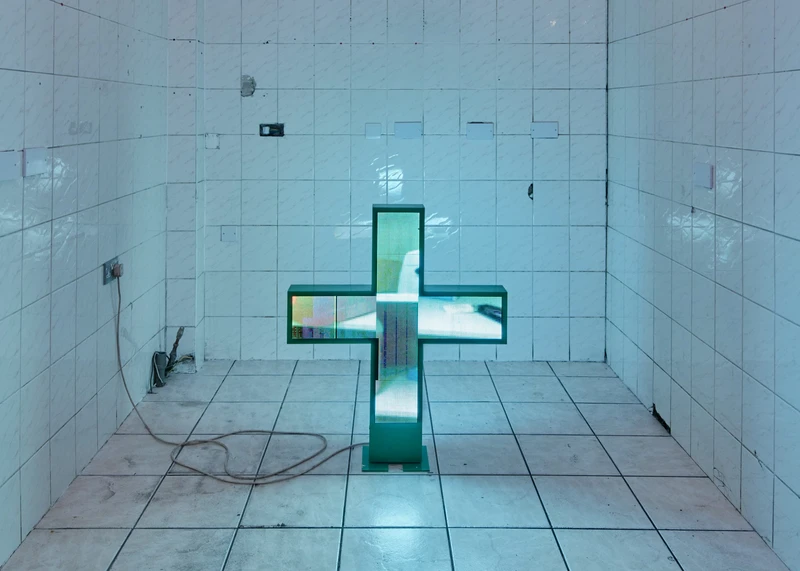
State intervention and the expanding authority of medicine and psychology remain materially present in the glazed tiles and exposed pipes that once channelled water to the baths and laundries of the CCA. This architecture connects to Jesse Darling’s three-panel altarpiece, The Cleansing of the Temple (Luke 19:46) (2024), which is made from generic white bathroom tiles smeared with dirt, drawing on religious narratives of purification and fears of contagion.
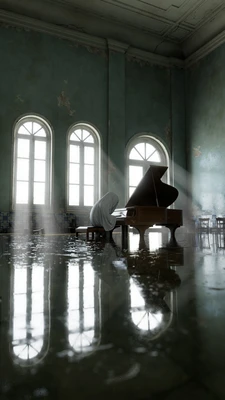
Water recurs across the works of Leah Clements, Lizzy Rose, JJJJJerome Ellis, and RA Walden as a medium that signals fluidity and transformation, in resistance to binary distinctions such as well/unwell, and human/non-human. A major new commission by Leah Clements, titled Pure Joy takes the form of a sound installation recounting a near-death experience that resists scientific explanation. Relayed beneath a suspended tarpaulin filled with water, through which rays of light refract, it stages an encounter that oscillates between otherworldly states.
A flare is also a burst of light – a warning, a signal for help, or an illumination of what has been previously hidden. Flare-Up foregrounds how artistic practices generate sites of collectivity and resistance, countering the socially dispossessing effects of ableism and austerity. Institutions for education, healthcare or welfare regulate bodies and determine eligibility, competence, and capacity. Bella Milroy’s Violence in the Form of Stationery (2018) is one in a series of drawings and poems on brown envelopes – known for containing life-altering decisions from the Department for Work and Pensions (DWP) – foregrounding the violence embedded in the materiality of this correspondence.
Across the works of Christine Sun Kim, JJJJJerome Ellis and Bella Milroy, language operates both as an instrument of state control and as a site of invention. Disfluency, the stammer, silence, mistranslation and creative captioning become generative strategies using language. In Sun Kim’s Close Readings (2015), sound is rendered visual, challenging normative assumptions about hearing and communication. In Ellis’s work, rhythmic disruption reorganises temporality itself; the gaps and spaces in between are where imagination flares and Black experience resides. These artworks complexify reductive representations of disability that reinforce structural injustice. Access is used creatively, not just as a formal device to reduce barriers to diverse groups, but as a conceptual method intrinsic to the work; for example, the captions used in Sum Kim’s work not only show the richness of this medium if used creatively, but also overwhelm the viewer with too much information, rendering it inaccessible to all.
The exhibition attends to the reclamation of crip identity – the strategic reappropriation of a pejorative term to forge political agency, collectivity and pride. Influenced by queer and feminist thought, “crip” operates here as a critical framework through which some artists align their work. Flare-Up does not impose a singular definition; rather, it presents multiplicity, contradiction and interdependency.
Several works engage with crip time, the concept describing how illness and disability bend and distort temporal experience through symptoms, medication, exhaustion or enforced rest. Crip time also marks the labour required to undertake tasks and the energy consumed by access needs. The necessity of slowing down becomes a critique of capitalist imperatives of productivity. RA Walden’s installation Crip Ecologies (2018-ongoing) folds temporal distortion into non-human relations: organic materials are displayed in glass jars gathered within the limits of the artist’s bodily range on a given day, making pace and capacity integral to the work’s form. Similarly, Abi Palmer’s sculpture Chic Slug (2025) humorously celebrates post-human, queer and slower temporalities.
Flare-Up situates contemporary British practices in dialogue with international contexts and with earlier movements, including the enduring influence of HIV/AIDS art and activism. Works by Félix González-Torres and Derek Jarman trace such intergenerational continuities. This lineage is most explicit in Benoît Piéron’s Pillbox Dungeness Seed Bomb (2018), a chromatic pill organiser containing capsules filled with seeds from plants at Prospect Cottage – Jarman’s final refuge-garden in Dungeness, Kent. The seismic impact of this legacy has been foundational in the formation of crip communities and artistic strategies, drawing on queer approaches to abstraction and opacity as forms of crip aesthetics.
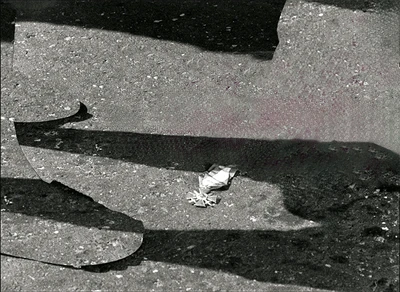
Networks of mutual support between artists working in the UK and internationally have been central to sustaining practices and catalysing institutional change. Direct and indirect references circulate across the exhibition; Jamila Prowse’s film Flare: the muted outline of a body in bed as a camera flash overtakes the scene (2025) draws on Donald Rodney’s hospital footage while paying homage to the legacy of artist and activist Lizzy Rose. Artist-led developments – including the use of access riders and expanded attentiveness to exhibition accessibility – function here as structural interventions, confronting the hard edge of ableist capitalism and its prioritisation of productive bodies.
The flare is not a singular event. It is a condition of intensification. It names the escalation of symptoms, the flash of illumination, the surge of sound. It marks rupture and gathering simultaneously. Across the CCA’s tiled surfaces and exposed pipes – remnants of earlier regimes of hygiene and control – artists assemble other infrastructures: of care, of memory and of resistance.
Curated by Natasha Hoare and Mariana Lemos.
SUPPORTED BY
Knotenpunkt
Trampoline
Henry Moore Foundation
Polina Mikhailova