ArchiveExhibition
Beat Zoderer: Haiku
11 Jun-11 Jul 2026
Bartha Contemporary
London W11 2AF
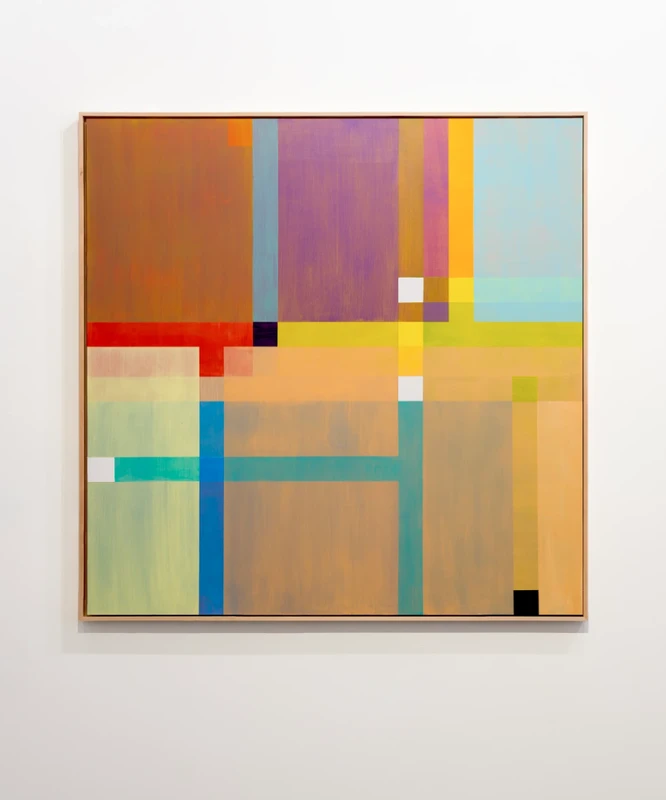
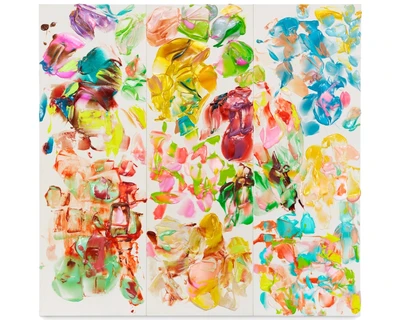
Bartha_contemporary is pleased to present a new body of work by Swiss artist Beat Zoderer, continuing one of the most distinctive practices in contemporary geometric abstraction. The paintings from the HAIKU series demonstrate the artist's enduring ability to reconcile conceptual precision with visual spontaneity, creating works that are at once rigorously constructed and unexpectedly lyrical.
The title of the series refers to the Japanese poetic form, whose brevity and clarity conceal remarkable emotional and intellectual depth. Rather than illustrating haiku, Zoderer adopts its structural economy as a conceptual framework. Each painting is composed of three successive translucent layers of paint, carefully superimposed within irregular and shifting grid structures. The resulting compositions are restrained yet visually complex, revealing an extraordinary richness through reduction.
Throughout his career, Zoderer has challenged the ideal of mathematical perfection that characterised much twentieth-century geometric abstraction. In Switzerland, concrete art found some of its clearest and most influential expressions in the work of Max Bill, Camille Graeser, Verena Loewensberg and Richard Paul Lohse, whose commitment to order, proportion and systematic construction shaped a decisive chapter in post-war abstraction. Zoderer works in close dialogue with this legacy, yet approaches it with a freer, more inquisitive sensibility, allowing intuition, humour, touch, and irregularity to unsettle its stricter conventions.
In the HAIKU paintings, this position is distilled into a concentrated painterly form. Colour is built through overlap rather than assertion. As the three painted layers meet, they produce subtle shifts in tone, density and depth, giving the works a quiet optical vitality. The grid remains central, but it is never static. Slight changes in alignment, rhythm and interval create compositions that feel measured yet alive.
These paintings reward close looking. Their apparent simplicity gives way to a more complex play of structure, transparency and perception. With restraint and lightness, Zoderer extends the language of concrete art beyond fixed systems, opening it towards movement, uncertainty and poetic resonance.