Exhibition
Surrealism: Picturing the Strange
17 Dec 2025-1 Dec 2026
Scottish National Gallery Of Modern Art
Edinburgh EH4 3DR
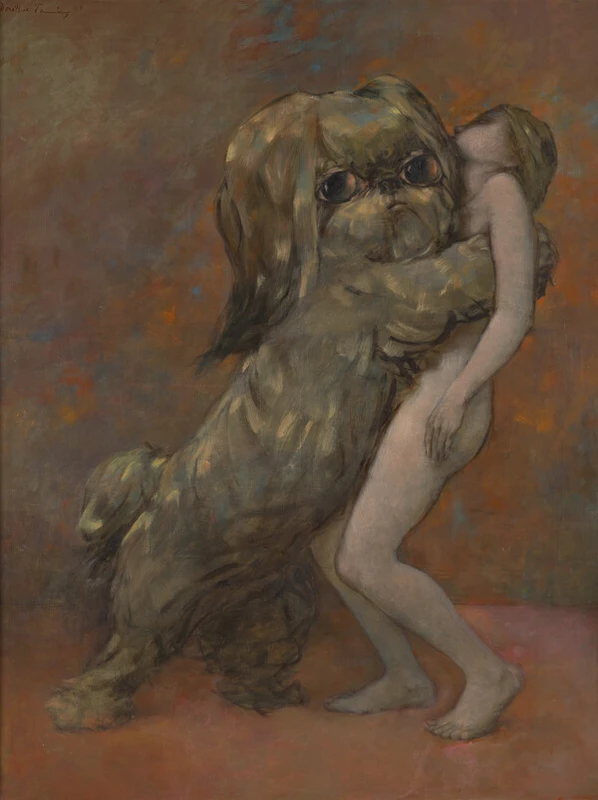
Dorothea Tanning, Tableau vivant
Surrealism (meaning in French, ‘beyond realism’) was one of the most radical and influential artistic and literary movements of the 20th century. In this room you will encounter bizarre creatures and weird machines, eerie landscapes and liminal spaces. These uncanny compositions juxtapose the familiar with the peculiar, subverting reality and exploring the potential of the mind.
Founded in 1924, with the publication of the first Surrealist Manifesto, Surrealism evolved from the anti-art Dada movement, which formed during the First World War (1914–1918). Like the Dadaists, the Surrealists rejected the ordinary and embraced the strange, using their art to question the state of the world at a time of great social, economic and political upheaval.
Surrealist artists were united by ideology rather than by a particular style or medium. Influenced by the psychoanalytical writings of Sigmund Freud (1856–1939), they attempted to reach beyond reality and immerse themselves in dreamworlds. Some even developed new ‘automatic’ techniques that relied on chance effects. These were believed to produce uninhibited, visionary signs and symbols, free from the constraints of rational thinking.